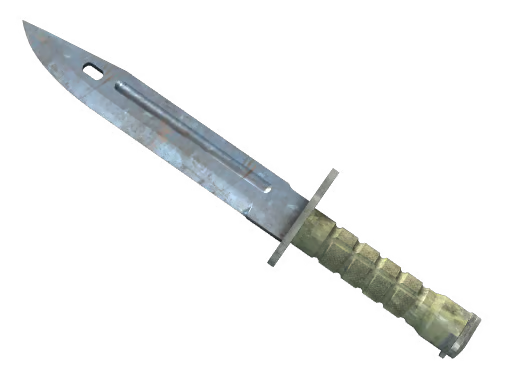
Bayonet | Rust Coat
- Wear range
- 0.40–1.00
- Released
- 2015-01-08
- Paint kit
- 414
- Finish style
- Patina
- Sources
- Chroma 3 Case、Chroma Case、Chroma 2 Case
- Drop chance (estimate)
- Chroma 3 Case:Any rare special item 0.256%; exact finish probability undisclosed;Chroma Case:Any rare special item 0.256%; exact finish probability undisclosed;Chroma 2 Case:Any rare special item 0.256%; exact finish probability undisclosed
Steam market price
CNY
Introduction
Knife | Rust Coat (aq_steel_knife) is one of those finishes you spot from a thumbnail: green-brown patina, layered oxidation, and metal that still reads sharp under the rust. Valve leaned on a patina / corrosion treatment rather than a painted illustration—so the story is all in how rust crawls across the steel, not in a graphic wrap.
The vibe is deliberately harsh. Community flavor text frames it as guilt you can’t scrub off; in practice that matches a skin that never pretends to be clean.
Quick facts
| | |
|---|---|
| Added | January 8, 2015 (Full Spectrum) |
| Designer | Valve (in-house patina finish) |
| Source | Chroma Case (Chromatic wave) |
| Type | Knife (fits multiple blade models) |
| Rarity | Rare |
| Finish style | Patina |
| Wear range | 0.40 – 1.00 |
That wear floor matters for buyers: there is no Factory New mirror tier. Every copy ships already “aged.”
What to look at in inspect
Patina here isn’t random noise—it flows from the edge and spine toward the guard. As float climbs, you get more bare metal and chunkier, broken rust borders.
Shop checklist (do this on Steam or C5GAME 3D inspect, not just screenshots):
- Tip arc — does the patina hug the curve or look like a muddy smear?
- Grind / edge line — sharp transitions are where rust “stacks”; that’s what separates weathered but intentional from just dirty.
- Blade–handle joint — different knife models catch light differently; the same wear label can look premium on one silhouette and flat on another.
Because minimum wear is 0.4, you’re always shopping which kind of old you want, not whether you can get “fresh steel.”
Wear and value (practical take)
- Lower float (closer to 0.40) — tighter patina, more controlled contrast; usually the pick if you want “salvaged naval steel” without turning the blade into a rust slab.
- Mid floats — sweet spot for moody industrial loadouts; inspect matters more than the number on the listing.
- High wear (toward 1.0) — aggressive metal show-through; great for wasteland aesthetics, easy to overpay if the listing photo hides blotchy zones.
Rare knife finish + case-only history keeps supply predictable; price swings tend to follow knife model hype more than patina alone. If you’re pairing with bright gloves or neon rifles, Rust Coat fights the outfit—if you run muted greys, olives, and shipwreck vibes, it ages well in the inventory.
Shopping verdict
Buy if you want a patina knife with strong identity, you’re fine with the 0.4 floor, and you’ll spend five minutes in inspect matching model + float to your taste.
Skip or pause if you need clean reflective blades, you judge skins by marketplace thumbnails alone, or you’re hoping this finishes “minimal”—the rust read is permanent by design.
Editor’s aside
I treat Rust Coat like a fixed aesthetic tax: you’re not paying for sparkle, you’re paying for a finish that still looks coherent when CS2 lighting beats it up. The mistake I see most is buying the cheapest float in the tier without checking the handle junction—that’s where bad patina looks like someone forgot to wipe the blade. On the right bayonet or karambit silhouette, though, it’s one of the few early Chroma-era knives that still feels on-theme in 2026: less sticker flex, more “this knife has a past.”